I am not an HR manager. But I work daily with HR leaders, boards and innovators across sectors. And as 2026 unfolds, one thing becomes impossible to ignore: the numbers are forcing a shift in what HR actually is.
Some signals that keep coming back, across reports and boardrooms:
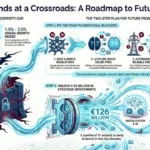
- In the Netherlands, labor market tension eased slightly in 2025, yet we still sit close to a 1:1 ratio between vacancies and jobseekers. In the EU, the Netherlands remains among the countries with the highest vacancy rates. Structural scarcity did not disappear.
- Internal mobility is widely recognized as the solution, but only a minority of employees believe they can realistically move internally. The gap between strategy and lived experience remains large.
- Employee engagement in Europe (13%) stays stubbornly low compared to the global average. At the same time, stress and burnout complaints remain high (1 out of 6 workers), especially in knowledge-intensive sectors. (RIVM)
- AI adoption in HR accelerated rapidly in 2024 and 2025 (38%). Many organizations are piloting GenAI. Yet only a small share of HR leaders believe managers are actually equipped to use AI responsibly and effectively (8%).
Put together, this points to one conclusion.
HR cannot stay focused on managing processes while work itself is changing shape.
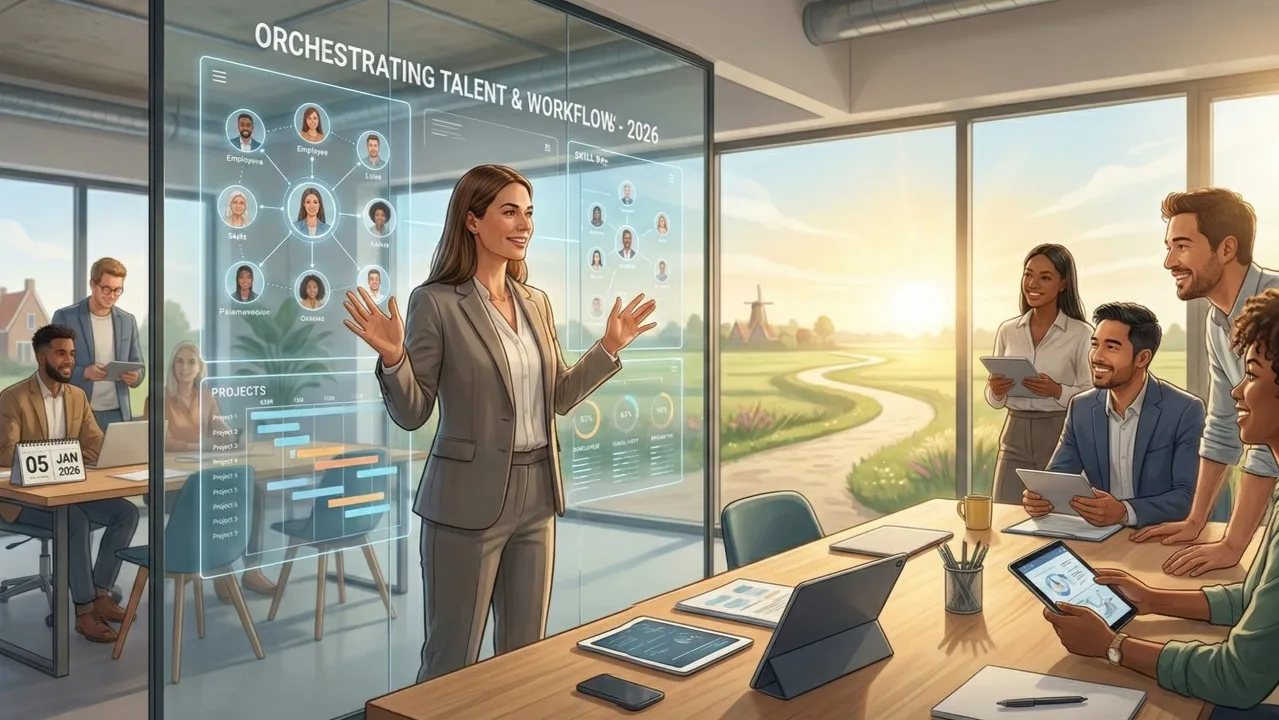
What I see emerging is a shift from HR as a function to HR as stewardship and orchestration:
- Stewardship over how work is organized, not just who fills which role
- Orchestration of skills, development and mobility, instead of static job architectures
- Stewardship over fair, explainable decision-making as AI enters the core of HR
- Orchestration of perspective and movement, not just policies and frameworks
What seems to work in practice:
- Designing work around skills and tasks, not job titles
- Making internal mobility a default path instead of an exception
- Letting AI support judgment, with clear boundaries and ownership
- Translating purpose into concrete choices about work, capacity and development
What does not work:
- Adding yet another tool to an already fragmented HR landscape
- Talking about engagement without changing how work is allocated
- Introducing AI without clarity on values, accountability and governance
If 2025 was the year of experimenting, 2026 feels like the year of choosing direction.
Not the question: what can AI do for HR? But the harder one: what kind of work do we want to enable, and what role should HR take in shaping that system?
If HR steps into stewardship and orchestration here, this decade can unlock enormous human potential. If not, we risk optimizing a model that no longer fits the reality of work.
Curious to hear from my network: where do you feel HR most needs to step into stewardship as 2026 unfolds?